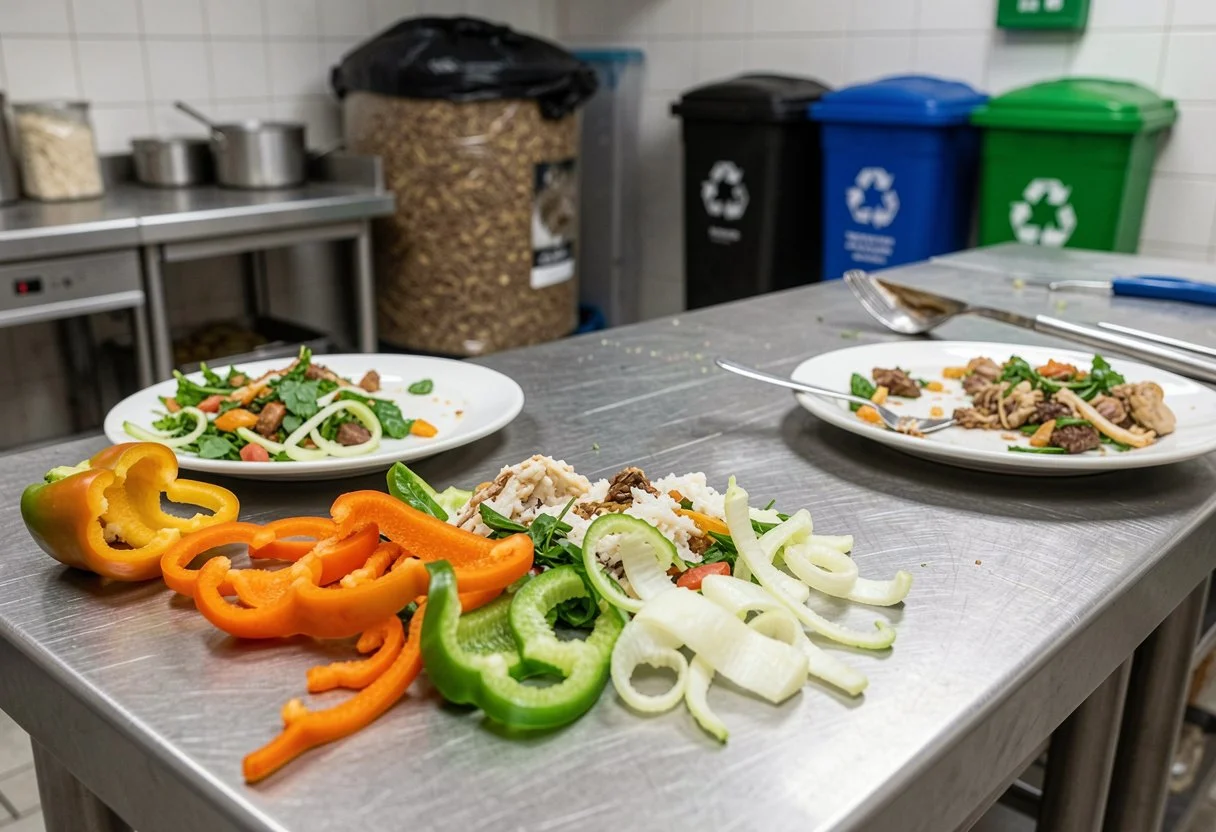
Restaurant business is a high-stakes game, and every single penny matters. While food costs and labor costs are a common obsession for every chef and manager, there is a silent killer of profits that goes unnoticed by many. The statistics reveal that almost one-third of all food products meant for human consumption go to waste. This is not just a green movement for a restaurateur; it’s a matter of throwing money into the bin.
Effective restaurant waste management is no longer just a 'green initiative'; it is a financial requirement. In this guide, we'll look at how you can streamline your business, reduce costs, and become a pro in restaurant waste disposal.
The True Cost of Food Waste
However, before we move onto the solutions, it is important to understand what this means. There are two main places that waste occurs:
Pre-consumer waste: these are the ingredients that were never taken out of the kitchen in the first place. Problems arise such as spoilage due to over-ordering and over-prepping.
Post-consumer waste: Post-consumer waste: these are the ingredients that went to consumers but were never eaten. Problems may be one of portion size, or satisfaction with menu choices.
By dealing with restaurant food waste in a robust and methodical way you not only do the environment a favor but you also do something for your gross margin.
Step 1: Do a comprehensive waste review
If you don't measure it, then you can't manage it. So for one week, start weighing exactly what gets tossed away. The different restaurant waste bins may be designated for prep waste, food that is spoiled, and plate waste.
At the end of the week, weigh all these bins. If your plate bin is full of leftovers, you're serving too much food. If your spoilage bin is heavy, then something is wrong with the system of ordering.
Step 2: Accurate Inventory & Storage
A good chunk of restaurant food waste comes from poor inventory control.
The FIFO Method: Always adhere to the "First In, First Out" principle. Clearly mark each container with dates.
Temperature Control: Make sure your refrigerators and freezers are properly calibrated. For fresh produce or dairy products, even a 2$ degree discrepancy can dramatically affect shelf life.
Digital Tracking: Move away from paper and clipboard. Modern inventory software can remind you when items are close to expiry, finding you enough to run a "daily special" if necessary.
Step 3: Creative Menu Development
Development can often be more profitable and sustainable. If you use a certain exotic vegetable only for one particular dish and that dish is not selling, you are really asking for trouble.
Cross-Utilization: This is the key to effective menu engineering
Root-to-Stem Cooking: Which is only partially related to a waste review. Stems and broccoli stalks are useless, but they can be cut into coleslaw material. Similarly, trimmings can serve as the base for rich stocks made in-house.
Portion Control: Studies have shown that $80\%$ of diners leave the garnish. Or the second slice of bread, so remove it.
Step 4: Efficient Kitchen Workflow
When it comes right down to it, human error is a major factor in waste. Whether it is a steak burned or even dropping a plate, where did this type of "mistake" as much as two.
Standardized Recipes: All cooks should know these exactly. It is helpful in avoiding overserving.
Prep Sheets: Only what is required for the specific shift should be prepped. Decisions should be based upon the historical sales data.
Step 5: Strategic Waste Disposal Facilities
The space also dictates how tightly you maintain discipline among staff - since if all bins are not easily seen, it's easy for everyone just to drop everything into one large bin.
When different colored bins are placed strategically around the premises, such as next to prep stations, at dish areas and near the bar area, the physical act of separating them becomes second nature and supports more efficient restaurant waste disposal and better restaurant waste management.
Organic Waste: Place food waste apart from dry trash.
Recycling: Differentiate out cardboard, glass, and plastics to reduce the weight of your major waste disposal.
Conclusion: Partnering for Success
Reducing food waste is a journey, and it takes a change of culture, a change of mind-set, a change of purchasing, and a change of logistical partners. If we can reduce what goes into our bins, we can increase what goes into our bank accounts.
However, handling the back-end logistics of waste can be overwhelming for busy restaurateurs. This is where a professional service provider like Willetts Waste makes the difference. Willetts Waste offers specialized restaurant waste management services, providing the right bins and reliable collection schedules tailored to your business needs. By outsourcing your waste logistics to experts, you can focus on what you do best-serving great food-while ensuring your business remains compliant and environmentally responsible.
Frequently Asked Questions (FAQs)
-
Restaurant food waste is mostly over-prepared or served in large portions. When a precise inventory management system is lacking, food goes bad before it can even be used.
-
At a minimum, three separate bins: General Waste, Recyclables (Dry Mixed Recycling), and Organic Food Waste. To understand the amount of bins that are right for your business, and how frequently they should be emptied, contact Willetts Waste.
-
Totally. The industry data also shows for every euro of wasted food, a restaurant saves 7 operating costs. It also lowers your purchasing costs and waste disposal fees.
-
Make it visual and a team effort. Put up signs above the restaurant waste bins, with shared waste data and targets, and you could issue each of these underground staff members with gifts as rewards when using incentives to motivate them.
-
Professional waste management ensures that your organization stays in compliance with local environmental laws. Willetts Waste offers the infrastructure and collection schedules you need to keep waste levels down, and following all the years, continues avoiding any sanitary problems on your premises as well as keeping operations running smoothly.