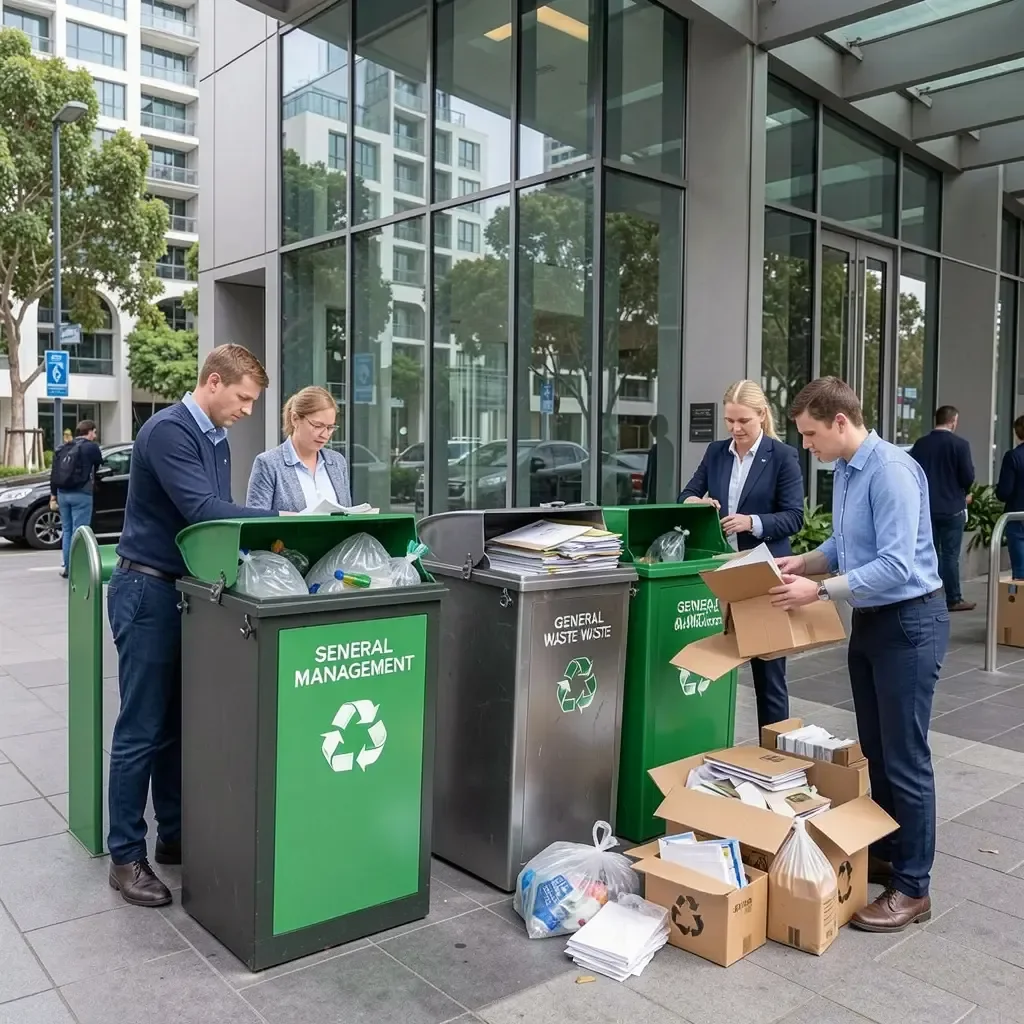
When it comes to general waste management, one of the most common areas of confusion for Sydney businesses is understanding the difference between general waste and recycling — and why that distinction matters more than ever.
.
Getting this right isn't just good for the environment. It directly impacts your disposal costs, your compliance with NSW regulations, and your business's sustainability credentials.
What Is the Difference Between General Waste and Recycling?
A waste management service is a professional solution that handles the full cycle of commercial waste — from collection and recycling through to disposal and compliance documentation.
General waste includes non-recyclable, non-hazardous materials — think food scraps, contaminated packaging, tissues, and soft plastics. Once collected, these materials are sent directly to a landfill.
Recycling covers clean, separable materials such as paper, cardboard, glass bottles, aluminium cans, and certain plastics. These are processed and reintroduced into the supply chain, reducing the demand for raw materials.
For Sydney businesses, understanding this distinction is the first step toward reducing waste costs and staying compliant with local regulations.
What Counts as General Waste in Sydney Businesses?
General waste includes anything that cannot be practically recycled or has been contaminated to the point where recycling is no longer viable.
Common examples include:
Food waste and kitchen leftovers
Soiled paper, such as tissues and napkins
Soft plastics and food wrappers
Broken items or products made from mixed materials
These materials are typically sent to landfill, making general waste the most expensive stream for businesses to manage — largely due to NSW landfill levies.
Key insight: Businesses that fail to properly separate their waste streams almost always end up paying more than they need to.
What Materials Go into Recycling in Sydney?
Recycling focuses on clean, recoverable materials that can be sorted and processed efficiently. Typical recyclable items accepted in commercial bins include:
Cardboard and paper (clean and dry)
Glass bottles and jars
Aluminium and steel cans
Rigid plastic bottles and containers
One critical point: contamination is a major problem across Sydney's recycling system. If recyclable bins contain food residue or mixed waste, the entire load can be rejected and redirected to landfill — defeating the purpose entirely.
Why Is Waste Separation Important for Sydney Businesses?
Proper waste separation isn't just an environmental responsibility — it has real operational and legal implications.
Cost savings: Recycling services are generally cheaper than general waste disposal because materials have a recovery value. Reducing your general waste volume directly lowers your waste bill.
Regulatory compliance: NSW regulations require businesses to manage and segregate waste appropriately. Non-compliance can result in penalties and reputational damage.
Sustainability outcomes: Diverting waste from landfill reduces your business's carbon footprint and supports your ESG and sustainability reporting goals.
Additionally, from July 2026, many Sydney businesses — particularly high-volume generators — will be required to separate food waste from general waste under updated EPA NSW guidelines. Now is the time to get ahead of that requirement.(Source: EPA NSW – Business Food Waste)
How Much Do Rubbish Removal Sydney Prices Depend on Waste Type?
Rubbish removal pricing in Sydney isn't one-size-fits-all. Costs vary based on several factors:
Total waste volume
Waste type — general waste vs recyclable
Collection frequency
Business size and site accessibility
General waste consistently costs more to dispose of because it attracts the NSW waste levy — a government charge applied to every tonne of waste sent to landfill. In contrast, recycling services are often more affordable because recovered materials have resale value that offsets collection costs.
(Source: NSW EPA – Waste Levy)
Practical takeaway: Every kilogram of general waste you convert into recycling is money saved on disposal costs. A structured waste management plan pays for itself.
How Does General Waste vs Recycling Impact Commercial Strip Out Projects?
Commercial strip-outs generate significant volumes of mixed waste in a short period, and poor general waste recycling practices during these projects can dramatically increase disposal costs.
Typical strip-out waste includes:
Fixtures and fittings
Old office furniture
Construction and demolition debris
Packaging materials
Many of these materials — particularly metal, timber, and cardboard — are recyclable if separated correctly. Businesses that work with a structured waste plan during strip outs benefit from lower disposal costs, better sustainability outcomes, and smoother compliance with environmental standards.
Willetts Waste works with Sydney businesses to implement tailored waste management plans for commercial strip-outs of all sizes.
What Are the Biggest Mistakes Businesses Make with Recycling?
1. Mixing food waste with recyclables. Contamination is the number one cause of recycling rejection. Even small amounts of food residue can render an entire bin load unrecyclable.
2. Treating general waste as a catch-all. When employees aren't sure where something goes, it ends up in general waste — unnecessarily driving up landfill costs.
3. Skipping staff training. Without clear guidelines and regular training, even the best bin setup will be misused. Staff buy-in is essential.
4. Not auditing waste streams. Most businesses don't know what's actually in their bins. A basic waste audit can uncover significant cost-saving opportunities.
How Can Sydney Businesses Improve Waste Management?
Improving your waste management doesn't require a complete overhaul. Start with these practical steps:
Conduct a waste audit to understand what you're generating and where costs are highest
Use clearly labelled bins at key points throughout the workplace
Train staff on what goes where — and refresh this regularly
Schedule regular collections to prevent overflow and contamination
Partner with a professional waste provider like Willetts Waste for tailored advice and reliable service
This approach aligns directly with the waste hierarchy: avoid → reduce → reuse → recycle → dispose — prioritising the most sustainable option at every stage.
Conclusion
Understanding the difference between general waste and recycling is one of the most cost-effective things a Sydney business can do. By separating waste streams correctly, training staff, and working with a trusted provider of general waste services in Sydney, businesses can cut disposal costs, stay ahead of NSW compliance requirements, and make a measurable contribution to sustainability.
Willetts Waste provides reliable general waste and recycling services across Sydney, tailored to the needs of commercial businesses of all sizes. Get in touch to find out how we can help you manage your waste more efficiently.
(Source: Willetts Waste – General Waste Sydney)
Frequently Asked Questions
-
General waste is non-recyclable rubbish sent to landfill, while recycling includes clean materials that can be processed and reused, such as cardboard, glass, and metals.
-
Contamination can cause the entire recycling load to be rejected and sent to landfill, negating any environmental or cost benefit.
-
Yes. Recycling is generally cheaper because landfill levies make general waste disposal significantly more expensive per kilogram.
-
Businesses must separate recyclables from general waste. From July 2026, many businesses will also be required to separate food waste, depending on the volume generated.
-
The fastest wins come from separating recyclables properly, reducing contamination, and auditing waste streams to identify what's being sent to landfill unnecessarily.