
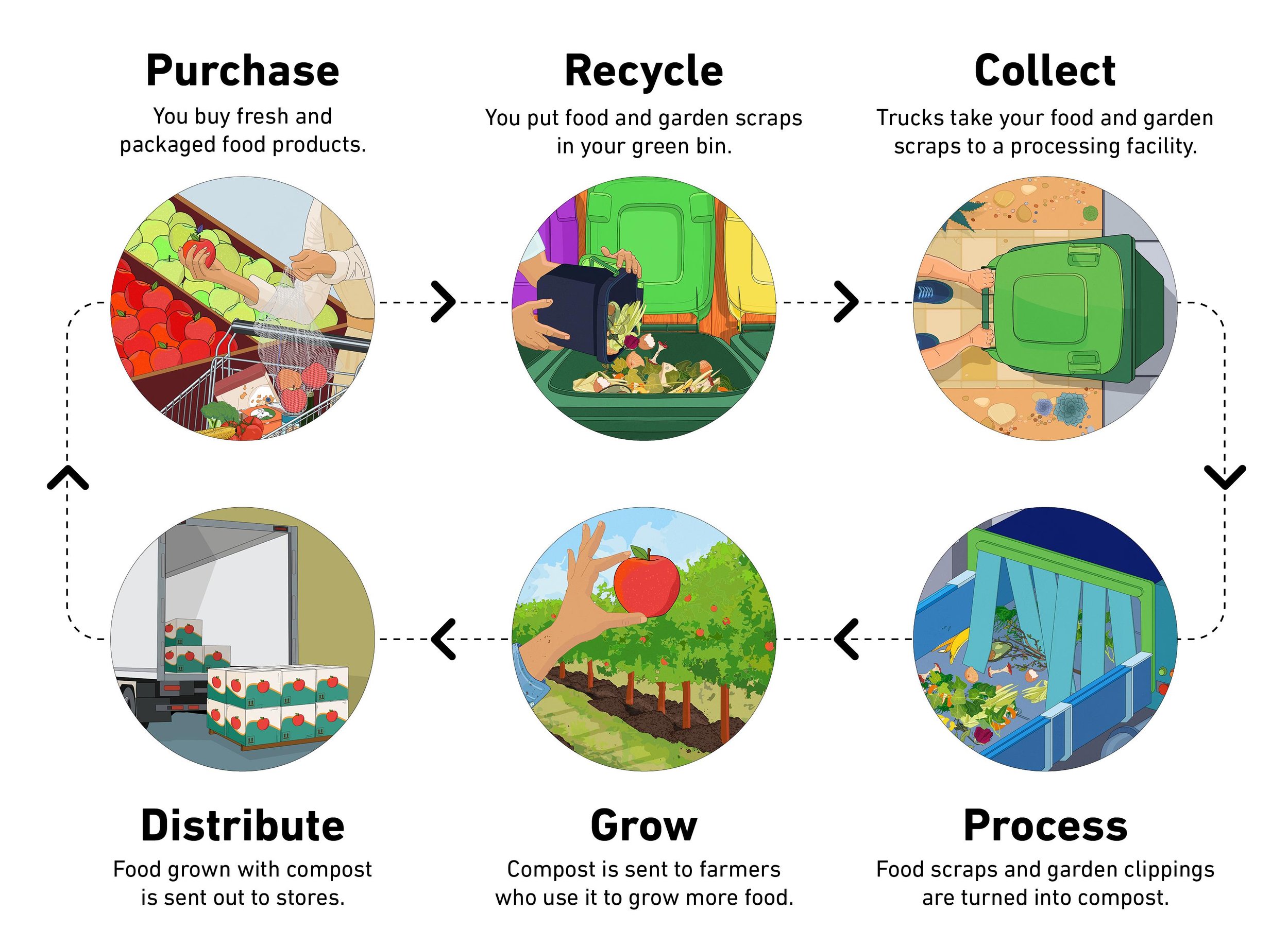
Most small business owners don't think twice about tossing food scraps and organic materials into the general waste bin — but that single habit is costing Australian businesses money and contributing significantly to landfill. If you're looking to dispose of organic waste properly, this guide covers exactly what you need to know: what counts as organic waste, the right removal methods, local options in Sutherland, and how to make the whole process easier to manage.
Organic waste is any biodegradable material derived from plants or animals — including food scraps, coffee grounds, food-soiled paper, garden trimmings, and compostable packaging. When organic waste ends up in a landfill instead of being processed correctly, it decomposes without oxygen and produces methane, a greenhouse gas roughly 28 times more potent than CO₂ over 100 years (Source: NSW EPA, Waste and Sustainable Materials Strategy 2041).
Why Organic Waste Disposal Matters for Sutherland Businesses
Australia generates around 7.6 million tonnes of food waste each year, and businesses account for a significant share of that figure (Source: Fight Food Waste CRC, 2019). In NSW, the state government has been actively tightening organics diversion targets under its Waste and Sustainable Materials Strategy, which means the way your business handles organic waste today will likely become a compliance issue tomorrow — not just an environmental one.
For Sutherland businesses specifically, getting organic waste removal right reduces general waste bin costs, can cut council waste levies, and demonstrates genuine environmental responsibility to customers who increasingly care about it.
What Counts as Organic Waste — and What Doesn't
Organic waste is not just leftover food. For most small businesses in Sutherland, it includes a wider range of materials than you'd expect.
What qualifies as organic waste:
Food scraps and preparation offcuts (fruit, vegetables, meat, dairy)
Coffee grounds and tea bags (non-synthetic)
Food-soiled cardboard and paper (pizza boxes, paper napkins)
Garden and green waste (if your premises has outdoor space)
Compostable packaging certified to Australian Standard AS 4736
What does NOT qualify:
Plastic-lined coffee cups (these are general waste)
Non-compostable packaging, even if labelled "eco."
Grease trap waste (this requires separate liquid waste disposal)
Misclassifying these materials is one of the most common reasons organic waste collections are contaminated and rejected, meaning the entire bin ends up in a landfill anyway.
How to Dispose of Organic Waste: Your Practical Options
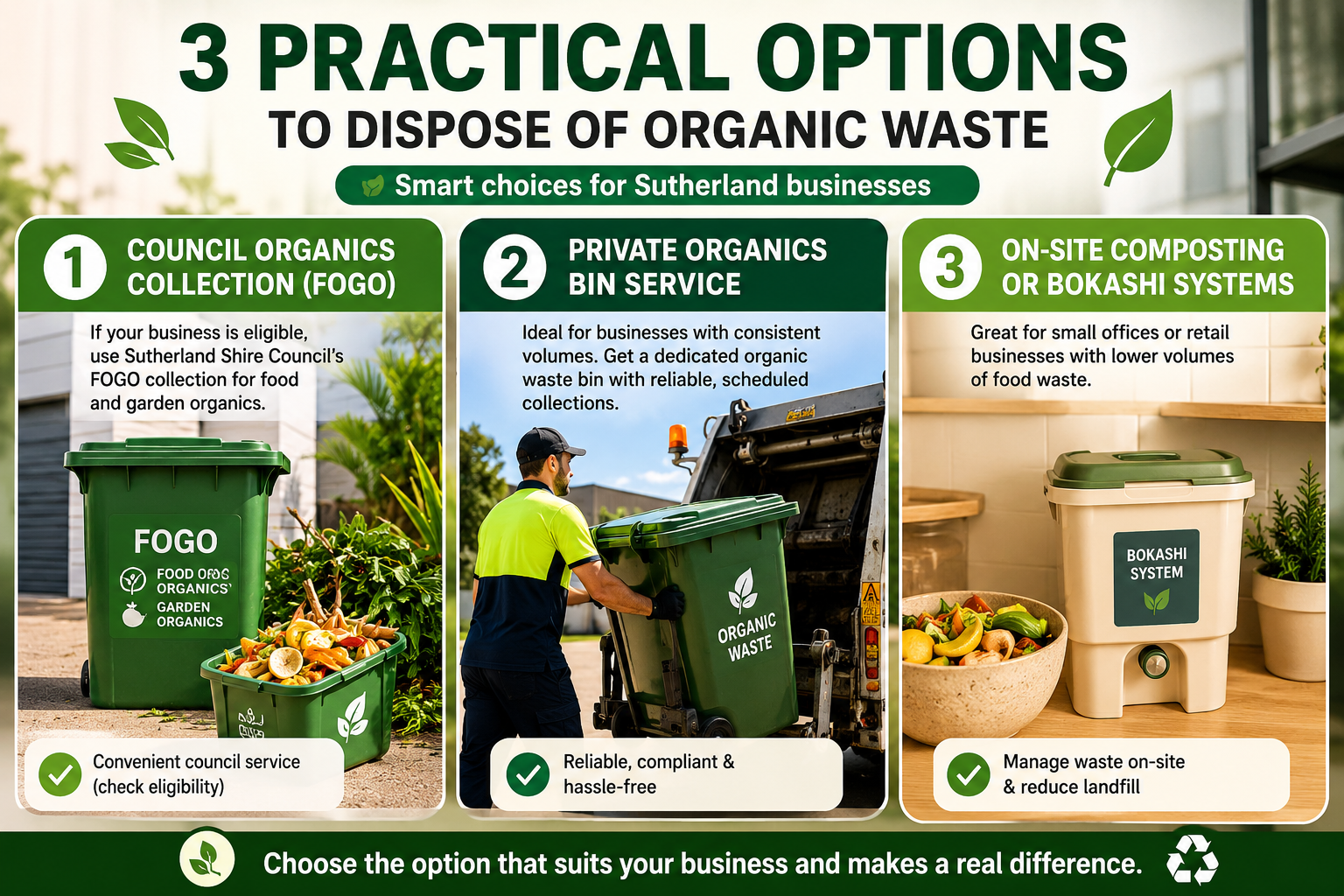
There are three main organic waste solutions available to small businesses in the Sutherland Shire area.
1. Council Organics Collection (FOGO) Sutherland Shire Council has progressively rolled out Food Organics and Garden Organics (FOGO) collection. Check directly with the council whether your commercial premises qualify, as eligibility differs from residential services.
2. Private Organics Bin Service For businesses generating consistent volumes of food waste — cafes, restaurants, catering operations, supermarkets — a dedicated organics bin through a private waste provider is the most reliable route. Willetts Waste offers scheduled organic waste removal across Sydney and the Sutherland area, keeping collections consistent and your site compliant.
3. On-Site Composting or Bokashi Systems For small offices or retail businesses with lower volumes, a sealed bokashi bin or small compost system can handle food scraps on-site. This works best when someone on your team is genuinely committed to managing it — otherwise, contamination builds up quickly.
Setting Up Organic Garbage Recycling at Your Premises
Getting organic garbage recycling working in practice is less about equipment and more about staff habits. The bin system means nothing if team members keep throwing the wrong items in.
A simple, effective setup for most Sutherland small businesses:
Place a clearly labelled organic waste bin in your kitchen or food prep area — keep it separate from general waste and recycling.
Display a laminated accepted/not-accepted list above the bin (not a generic one — make it specific to what your business actually generates).
Brief every staff member during onboarding, not just once at setup.
Schedule collections before the bin reaches capacity — overfull organic bins attract pests and create hygiene issues fast.
Audit contamination monthly. If your bin is regularly rejected, trace back which items or which team members are causing it.
A cafe in Sutherland running breakfast and lunch service, for example, can realistically divert 80–90% of kitchen waste from general landfill bins with a twice-weekly organic collection and one dedicated prep-area bin.
Frequently Asked Questions
-
Yes — commercial organic waste bins are designed to handle all food types, including meat, dairy, and cooked food. This differs from home compost systems, which often can't process animal products. If you're using a private organics collection service like Willetts Waste, meat and dairy are accepted in your bin as standard.
-
For most food-related businesses, a minimum of twice per week is recommended to prevent odour and pest issues. A cafe or restaurant generating daily food scraps may need three collections per week in warmer months. Your collection frequency should match your actual waste volume, not a one-size schedule.
-
The core disposal methods are the same across Sydney, but the availability of council-run FOGO, levy structures, and commercial waste obligations can vary by local government area. Sutherland Shire businesses should check directly with the council for current commercial FOGO eligibility, and can use a private provider like Willetts Waste for reliable coverage regardless of council program availability.
-
Collected organic waste is typically sent to a composting facility or an anaerobic digestion plant, where it's processed into compost, soil conditioner, or biogas. This keeps the material out of the landfill and turns it into a usable resource. NSW-based facilities operate under EPA licensing to ensure the process meets environmental standards.
What to Take Away From This
Disposing of organic waste correctly comes down to three things: knowing what qualifies as organic, choosing the right removal method for your business volume, and making the system easy enough that your team actually follows it. NSW's push toward higher organics diversion means businesses that sort this out now will be ahead of incoming compliance requirements — not scrambling to catch up.
If your Sutherland business is ready to set up or improve its organic waste management system, Willetts Waste can help. Our team can recommend the right bin size, collection schedule, and disposal solution based on your actual waste volume, helping you reduce landfill costs and stay compliant. Contact us today for tailored advice and a no-obligation quote.
