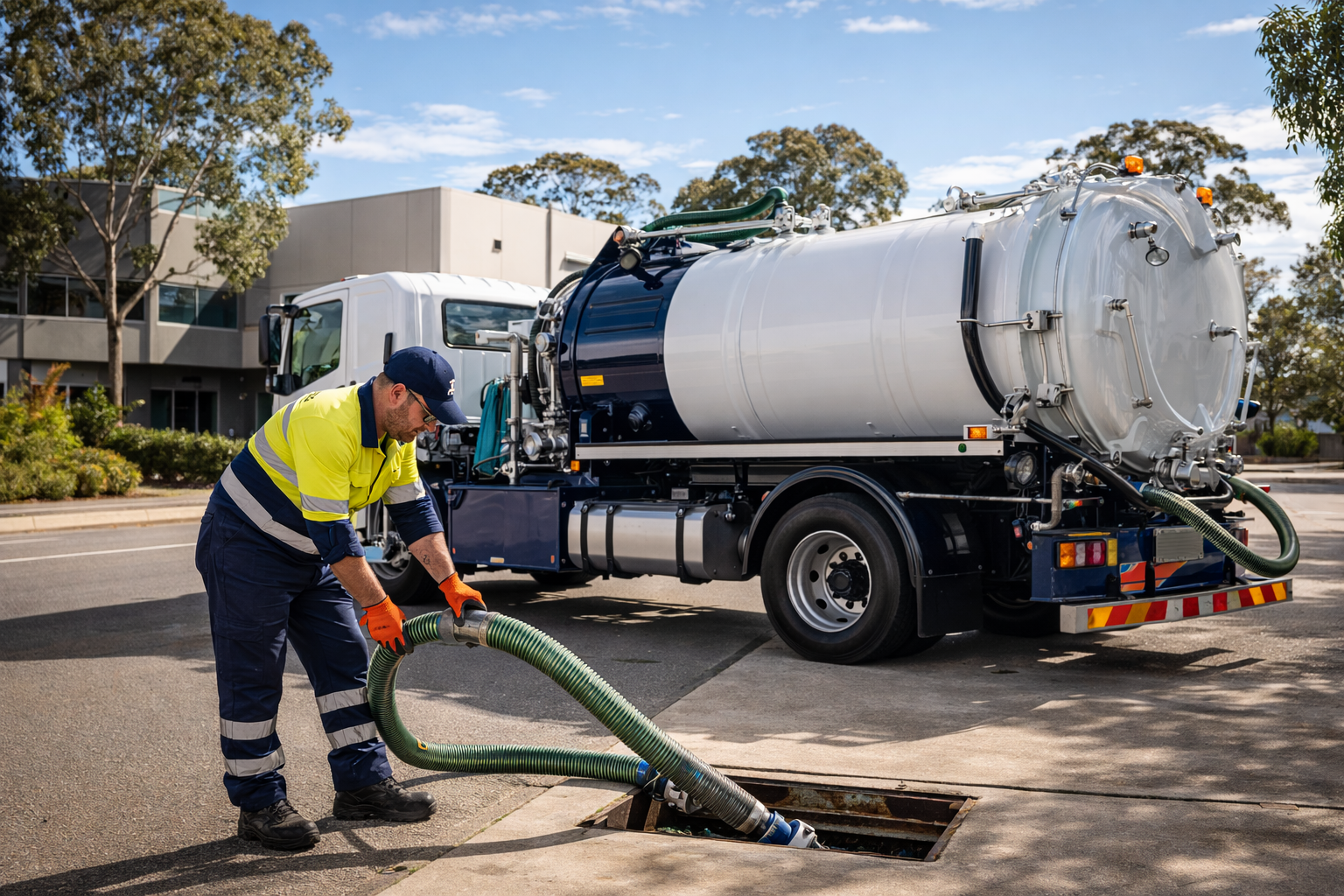
Improper liquid waste disposal causes serious environmental harm, including contamination of waterways, soil degradation, and long-term damage to local ecosystems. In Australia, businesses have a legal Duty of Care obligation under NSW EPA guidelines and the National Waste Policy to ensure liquid waste is handled, transported, and disposed of by a licensed waste management provider. Engaging a licensed operator is both an environmental responsibility and a legal requirement for any business generating liquid or scheduled waste.
For many businesses across Sutherland and the wider Sydney metro area, liquid waste is an unavoidable byproduct of daily operations — whether it's grease trap waste from a Caringbah café, chemical effluent from a Miranda workshop, or industrial runoff from a Taren Point facility. What happens to that waste after collection matters enormously. Poor liquid waste disposal practices don't just create compliance headaches; they cause real, lasting damage to local waterways, soils, and public health. Willetts Waste, headquartered in Sutherland, NSW, helps businesses get this right — every time.
The True Improper Disposal of Waste Effects on the Environment
Most people understand that tipping chemicals down a stormwater drain is wrong. But the improper disposal of waste effects extends far beyond a single incident. Liquid waste — including oils, solvents, paints, grease trap contents, and contaminated water — can leach into groundwater systems, enter waterways, and persist in soil for years.
In the Sutherland Shire, proximity to Port Hacking, the Georges River, and the Royal National Park makes responsible liquid waste management especially critical. Contamination events in these areas carry significant ecological consequences, affecting native fish populations, aquatic vegetation, and drinking water catchments.
How Improper Liquid Waste Affects Soil and Water Systems
When liquid waste bypasses regulated disposal channels, it saturates the soil and reduces its capacity to support plant life. Heavier compounds bind to soil particles and resist natural breakdown, creating persistent contamination zones. Runoff carries these pollutants into stormwater drains — and ultimately into local waterways.
The Broader Liquid Waste Management Market: A Growing Responsibility
Australia's liquid waste management market is expanding as both regulatory scrutiny and business awareness increase. The NSW EPA classifies many liquid wastes as "scheduled waste" under the Protection of the Environment Operations Act 1997, meaning they require specific handling, documentation, and licensed transport. Businesses that ignore these obligations face substantial fines and, increasingly, reputational damage.
Best Practices for Compliant Liquid Waste Disposal
Reducing the environmental impact of liquid waste starts well before collection day. Businesses that actively manage waste at the source — and partner with a licensed provider — are best placed to meet both NSW EPA requirements and their own sustainability commitments.
Steps to Organise Responsible Liquid Waste Disposal
Identify and classify your waste. Determine whether your liquid waste is classified as scheduled, hazardous, or general liquid waste under NSW guidelines. Misclassification is one of the most common compliance failures.
Use certified containers. Store liquid waste in clearly labelled, sealed containers approved for the relevant waste type. Never mix chemical waste streams.
Engage a licensed transporter. Under NSW Duty of Care obligations, businesses must verify that any contractor handling their liquid waste holds the appropriate EPA licence. Unlicensed disposal remains your liability.
Maintain records. Keep waste tracking documentation, including consignment notes, for a minimum of three years. Sutherland Shire Council and NSW EPA inspectors can and do request these records.
Prioritise treatment over landfill.Where feasible, choose disposal pathways that involve waste treatment, recycling, or resource recovery rather than direct landfill. This aligns with the objectives of Australia's National Waste Policy and reduces landfill levy costs.
Reducing Volume Before Collection
Businesses in Gymea, Engadine, Kirrawee, and surrounding areas can reduce disposal costs and environmental impact simply by minimising liquid waste at the source — through better process controls, equipment maintenance to prevent leaks, and staff training on correct waste handling procedures.
Why Sutherland Businesses Trust Willetts Waste for Liquid Waste Disposal
Willetts Waste has built a strong reputation across Sutherland Shire, Cronulla, Miranda, Caringbah, and Greater Sydney for providing reliable liquid waste disposal services and doing one thing consistently well: responsible, licensed waste management that keeps businesses compliant and protects the environment.
Unlike general rubbish removal operators, Willetts Waste holds the appropriate licences to handle and transport liquid and scheduled waste in line with NSW EPA requirements. Every job comes with proper documentation, traceable waste streams, and a service team that understands the specific regulatory environment facing businesses in Sydney's South and the Illawarra region.
For businesses across Australia — from small trade operators to large commercial facilities — Willetts Waste offers a dependable, compliant solution that removes the guesswork from liquid waste disposal. There's no need to cut corners when a licensed, local expert is readily available.
CONCLUSION
Liquid waste mismanagement is not a minor operational oversight — it carries real consequences for the environment, your business, and your legal standing under NSW and national waste regulations. From the waterways of Sutherland Shire to industrial sites across Australia, the effects of poor disposal practices compound over time. The solution is straightforward: work with a licensed provider, document everything, and treat compliance as a baseline standard, not an afterthought. If your business needs reliable, EPA-compliant liquid waste disposal and liquid waste management services, Willetts Waste is ready to help.
Frequently Asked Questions
-
Liquid waste includes any waste material in liquid form — such as used cooking oils, chemical solvents, grease trap waste, paint residues, and industrial effluent. In Australia, liquid waste is classified under state legislation; in NSW, the Protection of the Environment Operations Act 1997 categorises many types of liquid waste as "scheduled waste," requiring licensed handling and transport. Businesses must identify the correct classification before arranging disposal to meet their Duty of Care obligations.
-
Start by classifying your waste type, then store it in approved, clearly labelled containers — keeping different waste streams separate. Engage a licensed liquid waste transporter who can issue a consignment note and provide a compliant disposal pathway. Retain all documentation for a minimum of three years, as NSW EPA and local council inspectors may request these records during audits or compliance checks.
-
Improperly disposed liquid waste contaminates soil, groundwater, and surface waterways — often persisting for years before natural breakdown occurs. In coastal and riverside areas, contamination events can devastate aquatic ecosystems, harm native species, and compromise drinking water catchments. Beyond environmental damage, businesses that breach their Duty of Care face significant EPA fines and potential legal liability for remediation costs.
-
Businesses in Sutherland Shire — including those in Cronulla, Miranda, Caringbah, Menai, and Gymea — can arrange liquid waste collection through a licensed waste management provider like Willetts Waste. The provider will assess the waste type, schedule a compliant collection, issue the required consignment documentation, and transport the waste to an EPA-approved treatment or disposal facility. Sutherland Shire Council also provides guidance for households on disposing of small quantities of household liquid chemicals through drop-off schemes.
-
Costs vary depending on waste volume, type, and required treatment method, but engaging a licensed provider is far less costly than the alternative. In NSW, penalties for unlicensed liquid waste disposal or breaches of Duty of Care obligations can reach tens of thousands of dollars per incident under the Protection of the Environment Operations Act 1997. Businesses that use unlicensed operators may also be held directly liable, even if they did not personally mishandle the waste.